























































Pāuatahanui Inlet’s cockle population has climbed to an estimated 519 million, the highest recorded since the Guardians of Pāuatahanui Inlet began regular surveys in 1992.
The new results were released this month following analysis of the latest triennial survey, which was carried out on 2 November 2025.
Volunteers counted and measured 18,676 cockles across 30 of the inlet’s 31 survey transects, with the data later analysed by Earth Sciences New Zealand, formerly NIWA.
The estimated population has increased by just over 26 percent since the previous survey in 2022 and is now more than double the 222 million cockles estimated when the Guardians began the survey programme in 1992.
Average cockle density reached 51.9 per 0.1 square metres, higher than in any previous Guardians survey.
The proportion of juvenile cockles has also increased significantly.
Cockles measuring less than 10mm made up 21.4 percent of those sampled in 2025, compared with just 1 percent in 1992.
The Guardians say the high proportion of juvenile cockles, combined with continued growth in the overall population, suggests new cockles are regularly settling in the inlet and surviving.
Cockles, also known as tuangi, are an important indicator of ecological conditions because changes in their numbers and size can help show the effects of sediment, water quality and other environmental pressures.
The Guardians have carried out the survey every three years since 1992 using the same survey design and methods, providing more than three decades of data on the inlet’s cockle population.
The long-term results show cockle numbers declined between 2013 and 2016 before beginning a strong recovery. The 2025 result continues that upward trend.
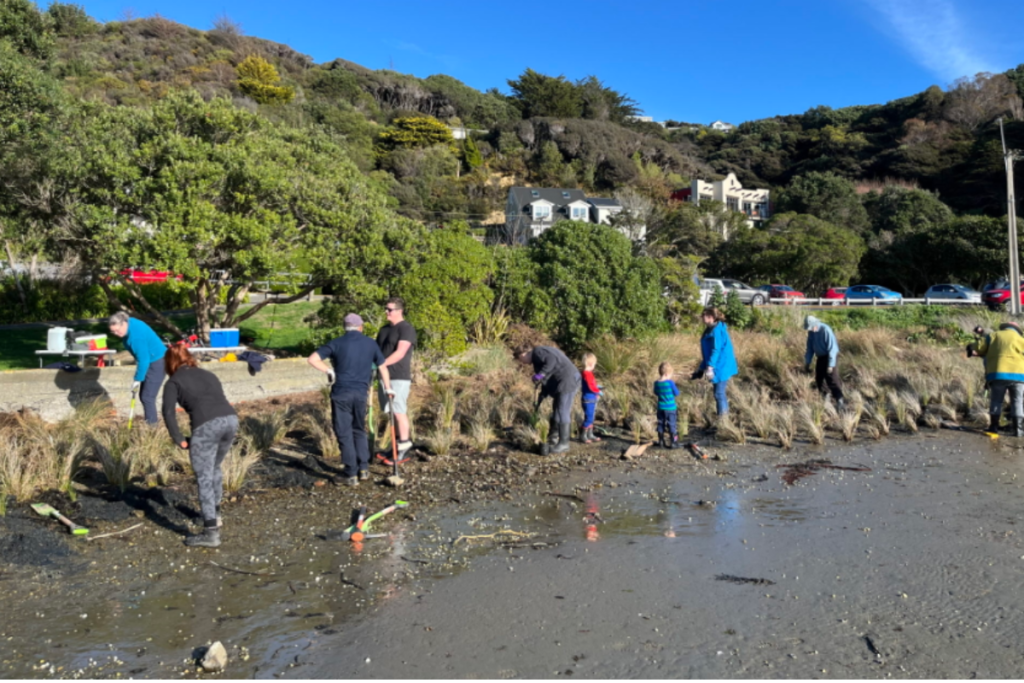
The Guardians are also continuing their restoration work around Pāuatahanui Inlet, with the final planting event of the 2026 season being held at Ivey Bay on Tuesday 15 September.
Volunteers will plant around 200 native rushes and terrestrial plants along the shoreline between 2pm and 4pm.
Participants are asked to meet at 1.45pm on the lawned area near Paremata Kindergarten. Parking is available at Ivey Bay, with volunteers asked to use the pedestrian underpass beneath State Highway 58.
The planting is supported by a three-year Greater Wellington Regional Council Community Fund grant, along with support from Te Rūnanga o Toa Rangatira, Porirua City Council and the Guardians of Pāuatahanui Inlet.
Anyone wanting to take part can email [email protected] with the number of people attending.