
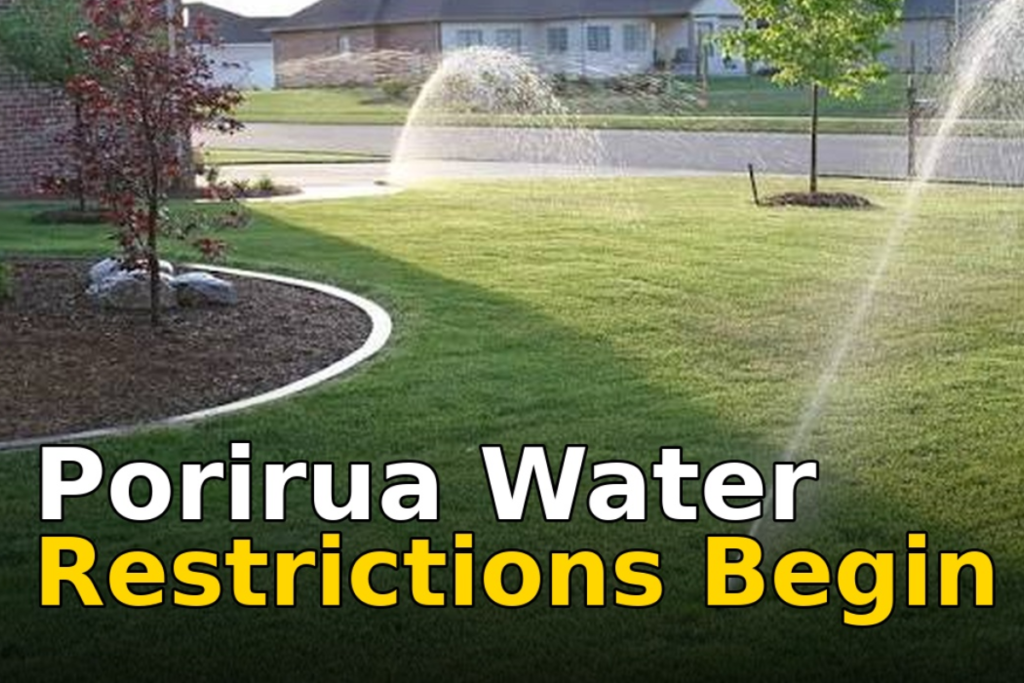
Porirua households have moved to Level 1 water restrictions as the Wellington region prepares for increased water demand over summer.
The restrictions came into force at 12.01am on Sunday, 27 September, coinciding with the start of daylight saving.
Under Level 1, sprinklers and irrigation systems can be used every second day according to a property’s street number.
Even-numbered properties can use them on even-numbered days, while odd-numbered properties can use them on odd-numbered days.
Sprinkler and irrigation use is limited to between 6am and 8am and 7pm and 9pm.
Handheld watering devices, including hoses, can be used on any day and at any time as long as they are not left unattended.
Tiaki Wai, the region’s new water services provider, said summer restrictions routinely begin with daylight saving.
Chief Operating Officer Charles Barker said managing water use early in the season could help reduce pressure on the region’s supply.
“Using water wisely now helps reduce the risk of tighter restrictions later if there is a long, hot, dry summer. Alternate-day restrictions help spread the demand across the network and reduce pressure on the supply.
“What we can do is manage the available water carefully to make sure we all have enough to get through summer and keep working to tackle the leaks from our ageing water network.”
The Wellington region relies on water from the Orongorongo, Te Awa Kairangi/Hutt and Wainuiomata rivers, along with storage in the Macaskill Lakes and Waiwhetū aquifer.
Tiaki Wai is working with Earth Sciences New Zealand to assess whether forecast El Niño conditions could result in a hotter and drier summer.
Barker said restrictions could move to Level 2 if conditions became very dry.
Level 2 would ban sprinklers and irrigation systems, although households would still be able to use handheld watering devices, including hoses.
The region has not needed restrictions above Level 2 during the past decade.
Tiaki Wai plans to publish regular information through summer showing water consumption, expected peak demand and the risk of tighter restrictions.
Residents are also being encouraged to repair leaks, take shorter showers and use water-efficient gardening methods such as deep watering and mulch.