



















































The sinking of the Lyttelton–Wellington ferry Wahine on 10 April 1968 was New Zealand’s worst modern maritime disaster. Fifty-one people lost their lives that day, another died several weeks later, and a 53rd victim died in 1990 from injuries sustained during the sinking.
The Wahine’s demise also marked a coming of age for television news broadcasting in New Zealand, as images of the disaster were beamed into the nation’s living rooms. The footage was later screened around the world as the international media focused on Wellington.
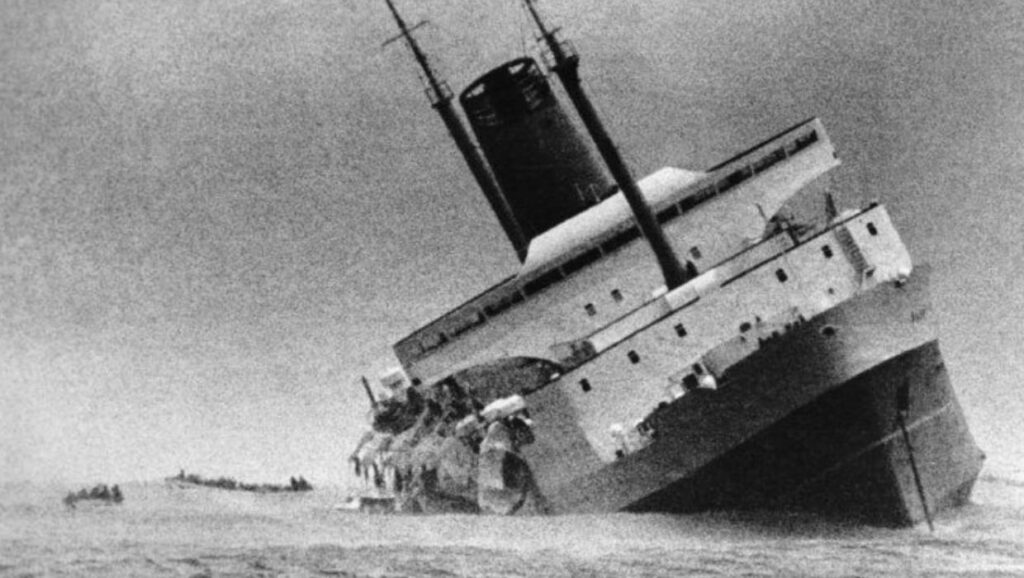
Would-be rescuers stood helplessly on the beach at Seatoun as the Wahine succumbed to one of the worst storms recorded in New Zealand history. It seemed impossible that so many lives could be lost so close to shore. Although the main cause of the accident was the atrocious weather, a subsequent court of inquiry found that errors of judgement had been made both on board the ferry and on shore. Shipwrecks had been common in the 19th century, but this was the 1960s – how could a large, modern vessel founder within sight of New Zealand’s capital city?
The Union Steam Ship Company’s 8948-ton roll-on roll-off (RO-RO) passenger ferry Wahine, the largest ship of its kind in the world when completed two years earlier, left Lyttelton at 8.40 p.m. on the evening of 9 April. There were 734 passengers and crew on board. Storm warnings had been issued, but rough seas were nothing new in Cook Strait. As it turned out, the Wahine was about to sail into one of the worst storms ever recorded in New Zealand. The ship reached Cook Strait as tropical cyclone Giselle swept south and collided with a southerly front. The combination of warm tropical air and cold air dragged up from Antarctica produced exceptionally violent turbulence.
At 5.50 a.m. on the morning of 10 April Captain H. G. Robertson decided to enter Wellington Harbour. The wind was blowing at over 50 knots, but vessels had entered the harbour in stronger winds before. Just as the Wahine reached the narrow funnel of the harbour entrance, however, the wind speed suddenly increased to over 100 knots. Shortly after 6 a.m. the Wahine’s radar system failed and a huge wave slammed into the ship, throwing many of those on board off their feet. Now side on to the towering waves, the vessel was pushed towards the notorious Barrett Reef on the western side of the harbour entrance.
For 30 minutes the Wahine fought the waves, as Robertson apparently attempted to turn his ship back out to sea in poor visibility. At about 6.35 a.m., unaware of his location, the captain ordered full astern. At 6.40 a.m. the vessel reversed onto Barrett Reef. The starboard propeller was knocked off, and the port engine stopped shortly after. Initially many of the passengers were unaware of what was happening due to the ferocious battering the ship was receiving from the storm.
With the ship’s engines no longer working, Captain Robertson ordered that all watertight doors be closed and both anchors dropped. Passengers were now informed that the ferry had run aground on the reef. The signal station at nearby Beacon Hill was notified of the accident as the crew prepared life-saving equipment. Flooding in four compartments and on the vehicle deck raised serious concerns about the stability of the ship.
The Wahine dragged its anchors and gradually drifted further up the harbour past Point Dorset. Despite being close to shore, the weather made it impossible for rescuers to reach the ship from land.
The tug Tapuhi set off from Queen’s Wharf and reached the Wahine at about 11.00 a.m. By 11.50 the tug had secured a line to Wahine. An attempt was made to tow the ferry to safety, but the line quickly gave way. Other attempts to get a line to Wahine failed. Shortly after noon the deputy harbourmaster, Captain Galloway, managed to climb aboard the Wahine from the pilot launch, which had also reached the scene. He risked his life jumping from a heavily pitching launch to a ladder hanging over the starboard side of the ship.
Abandon ship
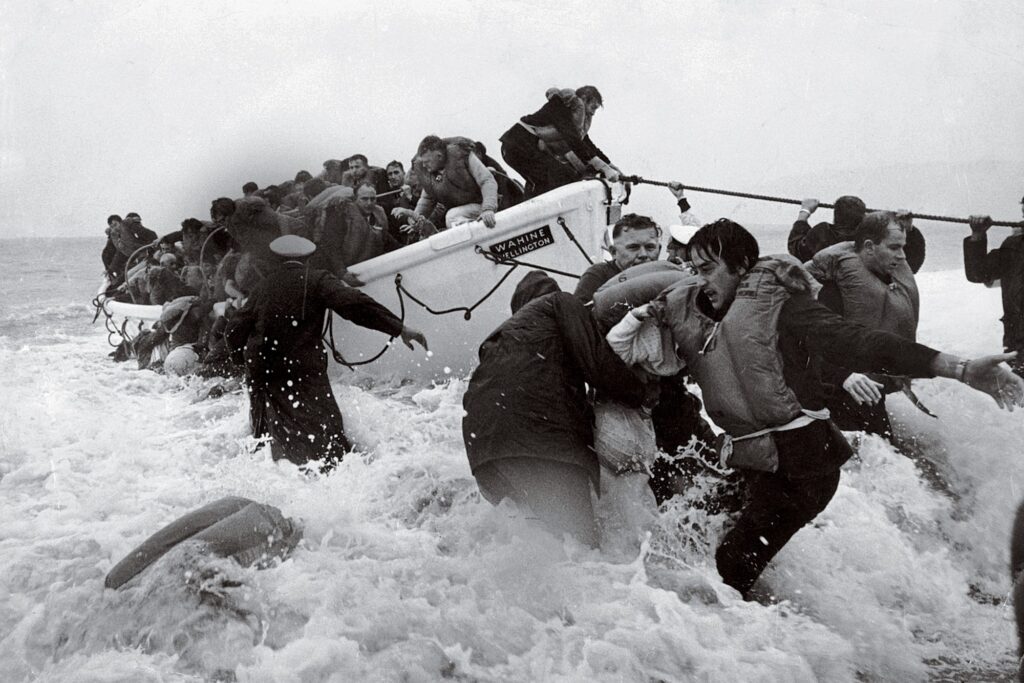
By 1.15 p.m. the Wahine was listing heavily to starboard. The tide and storm had swung the ship around so that there was a patch of water sheltered from the wind and waves on the lower starboard side. Just before 1.30 p.m. the order was finally given to abandon ship.
For the Full story see: https://nzhistory.govt.nz/page/timeline-tragedy