
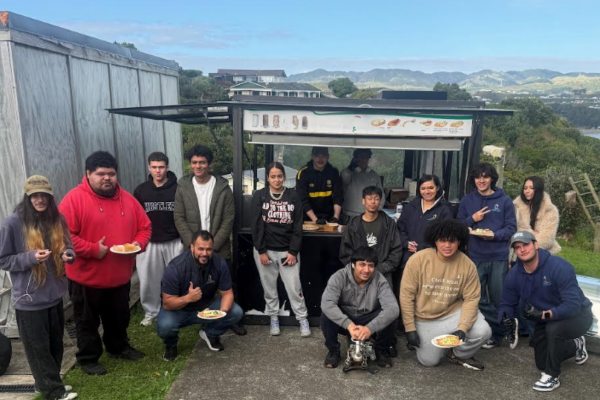











































































Twice as many Porirua rangatahi will be helped off benefits and into work each year after Porirua Whānau Centre secured a new three-year contract with the Ministry of Social Development.
The renewed He Poutama Rangatahi contract will support 40 young people aged 15 to 24 each year, allowing the centre to work with 120 rangatahi over the life of the agreement.
Porirua Whānau Centre Programmes Manager TJ Fermanis said the renewed funding reflected six years of strong results with young people facing some of the biggest barriers to employment.
The work readiness programme began in 2020, supporting 40 rangatahi over two years. It later increased to 50 participants over two and a half years before reaching 57. The new agreement is the largest commitment yet.
“That’s 120 young people we get to work with. Every time we’ve gone back to MSD, they’ve asked us to do more with more kids. That doesn’t happen unless the work is landing,” Fermanis said.
“Everyone has a choice, but the harsh reality is that most of these kids have given up on mainstream learning.
“And the other harsh reality is that for some, we are their last chance, but we try everything in our power to ensure they don’t waste the opportunity.”
Fermanis said many participants have left school early, have no formal qualifications, have been involved with the justice system, or come from families where benefit dependence has continued across generations.
The programme focuses on building confidence alongside practical employment skills. Participants receive help with CVs, driver’s licences and work readiness while also discovering strengths they may not have recognised before.
One initiative has seen rangatahi running a food truck and selling hāngī, giving them hands-on experience preparing food, serving customers, handling money and working as a team.
Fermanis said the programme’s long-standing connection to the community was one of its biggest strengths.
“We’ve been in Cannons Creek since 1994, so all these kids know us before they walk in the door.
“That trust is what gets them here, and what keeps them here when things get hard at home.”
One recent participant, who left school at 14 after being bullied, described the programme as the highlight of his life so far. He has since secured a job interview and is addressing addictive behaviour as he works towards employment.