
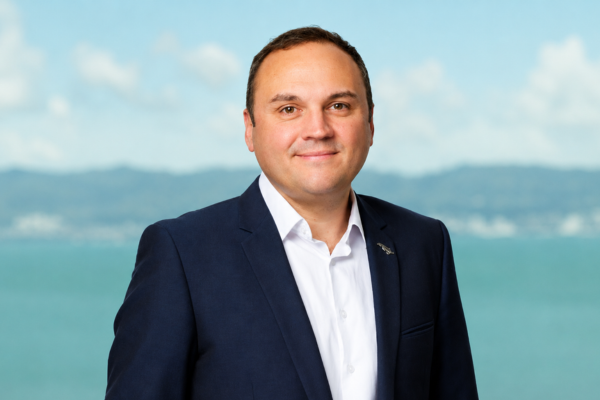








































































Former Porirua mayor Nick Leggett says proposed local government reforms must deliver better infrastructure, housing and regional capability, not just redraw council boundaries.
Leggett, now chief executive of Infrastructure New Zealand, said councils have a limited window to take charge of reform plans before change is imposed on them.
“Councils have three months now to grasp the nettle and change,” Leggett told Porirua News.
“This fast-track process gives regions an opportunity to come together, build scale, and strengthen their ability to deliver for their communities. They should take it.”
The Government has opened the door for councils to propose consolidation and reorganisation plans aimed at reducing fragmentation and improving efficiency across local government.
Leggett said councils needed to show leadership.
“Councils must step up. If they do not take this opportunity, there is a real risk change will be done to them, not with them.”
Born in Porirua and raised in Whitby, Plimmerton, Papakowhai and Paremata, Leggett first entered local politics at age 19 when he was elected to Porirua City Council in 1998. He later became Porirua’s youngest mayor in 2010 and served two terms with strong public support.
Leggett said structural change alone would not solve the challenges facing councils.
“You cannot expect better performance from local government without giving it the tools to succeed,” he said.
“Councils own around 35% of New Zealand’s public infrastructure but receive only about 11% of total tax revenue. That imbalance, which stands out globally, has to be addressed.”
Infrastructure New Zealand said the success of reform should be measured by whether it speeds up infrastructure delivery, improves housing supply and creates more affordable services.
“This isn’t about lines on a map,” Leggett said.
“The goal has to be faster infrastructure and transport delivery, more housing choice, stronger growth, and affordable services for communities.”
The organisation is also calling on central government to support councils that move quickly on reform, including through regional or city deals that could unlock funding and financing options.
Leggett said reform could also lead to broader constitutional change over time, with more powers handed to local communities.
“New Zealand is one of the most centralised countries in the developed world,” he said.
“Strengthening local government with greater scope and scale should prepare the way for more powers and responsibilities to sit close to communities over time.”
He also said councils needed to improve how they engage with residents during the reform process.
“Communities need to see themselves in these new structures,” Leggett said.
“Innovative approaches, such as citizens’ assemblies or other forms of public engagement, could play a role in building confidence and legitimacy for change.”
The Government’s reform process is expected to unfold over the coming months as councils consider whether to submit reorganisation proposals.