










































































Porirua residents are likely to keep a local rubbish drop-off at Spicer after the landfill closes in 2030, but waste would be trucked elsewhere for burial under Porirua City Council’s preferred option.
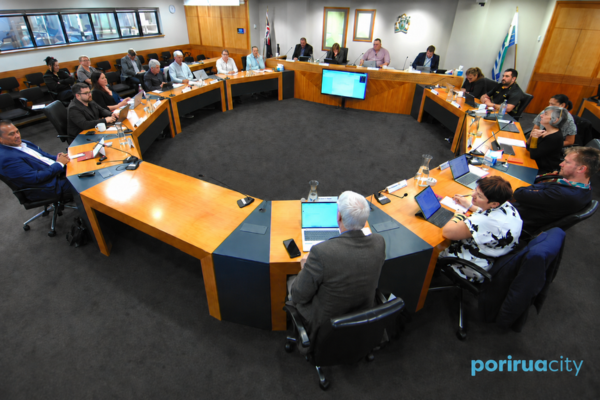
The council’s Te Puna Kōrero Committee today chose a public-only refuse transfer station as the option to be scoped in more detail for the 2027-37 Long-term Plan.
The decision does not give final approval for the future service, but sets the direction for further planning and public consultation.
Spicer Landfill’s resource consent expires in 2030. The council says it is unlikely a new consent to continue operating the landfill would be approved.
At present, people drop rubbish at the transfer station at Spicer, and the waste is buried within the landfill grounds.
Under the preferred option, residents would still be able to drop rubbish at Spicer, but it would be taken away and disposed of elsewhere.
Porirua Mayor Anita Baker said consultation showed the community wanted to keep access to local waste services, while also retaining Trash Palace.
“The option selected today allows for both these things, as well as being the most cost effective,” Baker said.
The preferred option, known as option A, would accept waste from cars, vans, trailers and small or light trucks only.
It would not service heavy vehicles or provide clean fill disposal.
Trash Palace and the bulk recycling facility would remain on site, providing waste minimisation and recycling services.
Earlier this year, the council asked the public for views on four options for Spicer’s future.
Three involved different types of transfer station, while the fourth was to close the landfill with no replacement service.
Seventy per cent of submitters supported some form of transfer station, while 24 per cent supported closing the landfill with no replacement service.
Of the transfer station options, the public-only model was the most popular.
Onepoto Ward councillor Geoff Hayward said the council was faced with difficult trade-offs.
“None of these choices are ideal,” Hayward said.
“We are not in a position where we can simply choose to apply for a consent to extend. With the odour problems we have right now, we are already not 100 per cent compliant under the current consent, and you cannot ignore reality. Greater Wellington won’t.”
Hayward said the decision had to balance cost, level of service, cultural values, community safety and local control.
“There is no perfect option, only a least worst path forward for the landfill,” he said.
He said the council also had to consider fairness for residents who still needed a simple, local place to take rubbish.
“If we get that wrong, we risk pushing people into worse outcomes, not better ones.”
Hayward said the design and operation of any future transfer station would be critical, including how people moved through the site, how staff engaged with the public, and whether pricing or discounts could encourage recycling and waste diversion.
He said councillors had also reflected on submissions from Ngāti Toa, which made clear that even a future without a landfill was not its preferred outcome.
The committee also supported a chair’s recommendation from Hayward for the 2027-37 Long-term Plan consultation to include a wider waste minimisation and circular economy programme.
That work will consider improvements to kerbside rubbish and recycling, commercial waste operators, pricing incentives at disposal facilities, the future of the council’s bag-based rubbish service, household food scraps and garden organics, wastewater sludge, and construction and demolition waste.
Baker said the wider Wellington region needed a more strategic conversation about residual waste.
“If ever there were a candidate for councils to be closer aligned on an important issue, this is it,” she said.
The preferred transfer station option will now be scoped in more detail before consultation through the 2027 Long-term Plan.
A final decision on future waste services at Spicer is expected through that process.