
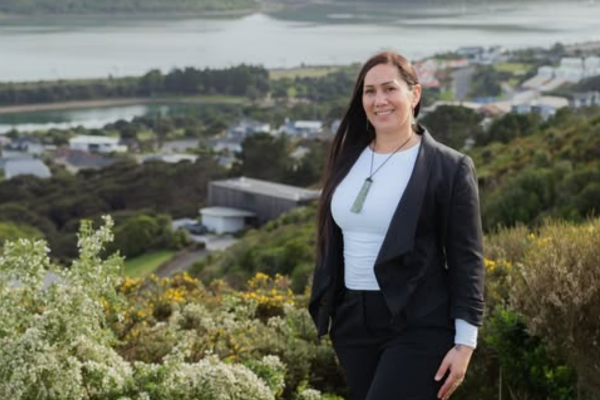





































































Porirua Whānau Centre has urged Family Court judges to look beyond apparent non-compliance and recognise the poverty, fear and trauma often sitting behind whānau behaviour in court.
The centre presented at a national judicial education seminar in Wellington yesterday, after being invited by the Ministry of Justice to speak to about 25 Family Court judicial officers from across Aotearoa.
Jessica Tehuia, hapori service manager at Porirua Whānau Centre, said missed appointments, anger or disengagement were often seen in isolation.
“When a judge sees a parent who missed appointments, who’s angry, who seems disengaged or non-compliant, what may sit behind that is no transport, poverty, overwhelm, fear, shame, and a deep distrust of systems that have never worked for them,” Tehuia said.
“We’re not making excuses. We’re asking the courts to see the whole picture, because how a judge responds to that behaviour changes everything for the tamariki in front of them.”
Porirua Whānau Centre has supported whānau involved with Oranga Tamariki and the Family Court for 32 years.
It provides 24 services across housing, education, family violence, parenting, advocacy and youth development.
Its Hapori programme, a community-led partnership with Oranga Tamariki and local iwi established in 2023, has helped reduce the number of tamariki in care in Porirua from 98 to 58.
The centre says the programme has also achieved the lowest re-notification rate in Wellington.
Tehuia said the results showed agency-led intervention alone was not enough.
“Hapori works because it is relationship-centred, strengths-based, and whānau-led,” she said.
“Before whānau can change, they need to feel safe, heard, understood, and part of the solution. That is what we bring. And it is what the court system, on its own, cannot always provide.”
The centre presented alongside VOYCE, with several community organisations asked to speak directly to judicial officers.

Porirua Whānau Centre chief executive Liz Kelly said the invitation reflected a shift in how the courts were thinking about their role.
“For 32 years we have sat alongside the same whānau who appear before these courts,” Kelly said.
“What our team shared today is evidence that a different approach works. When whānau are treated as part of the solution, tamariki are safer.
“We want judges to leave today understanding that.”
Porirua Whānau Centre says its message to the court sector is that better outcomes for tamariki come when whānau are heard, supported and treated as part of the solution.