



































































Five Porirua schools are taking part in a pilot programme aimed at identifying hearing and auditory processing difficulties that may be affecting children’s learning.
Windley School, Titahi Bay North School, Corinna School, Russell School and Holy Family School are working with Hearing Wellington on the programme.
The assessments look for permanent hearing loss, ear infections, wax and auditory processing difficulties.
Children with Auditory Processing Disorder, known as APD, may have normal hearing but struggle to process and understand speech, particularly in noisy classrooms or during instruction-heavy lessons.
Hearing New Zealand president and audiologist Dr Lisa Seerup said the number of children showing some form of difficulty had surprised those involved.
“What surprised me most was the sheer number of children that had some type of issue,” she said.
Hearing New Zealand said 75 per cent of the children tested had a hearing or listening issue, including permanent hearing loss, auditory processing difficulties, ear infections or wax.
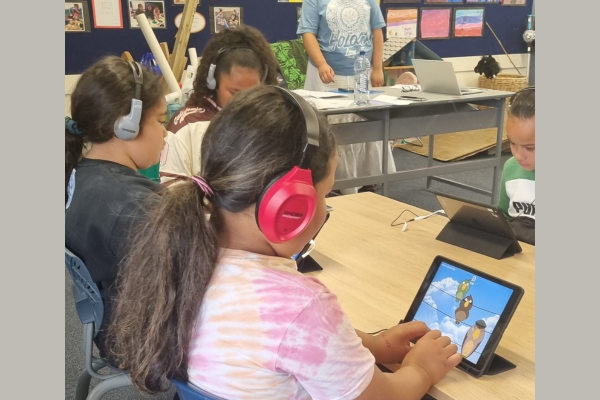
Many students showed auditory processing difficulties despite recording normal hearing results.
Seerup said hearing was checked through the B4 School Check but was not routinely tested once children were at school.
She said listening was a foundation for learning and unidentified difficulties could affect classroom participation, reading and wider educational achievement.
“Children cannot recognise sounds they cannot hear,” she said.
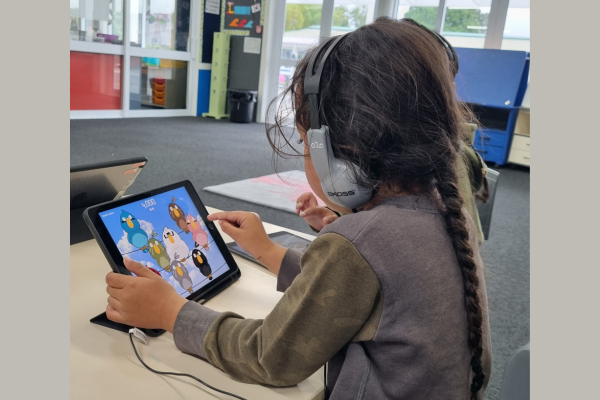
The pilot uses technology that allows hearing and auditory processing screening to be carried out across a whole class.
Students also complete online listening exercises for 10 to 20 minutes, twice a week, over 10 weeks.
Hearing New Zealand said students had shown improvement after completing the programme.
Seerup said adapting testing and support from an individual setting to the classroom had required close work with the participating schools.
“The schools were amazing in helping us move from theory to what works in the classroom,” she said.
“Scaling a programme from a one-to-one basis to the classroom is not as simple as cut and paste.”
She said the Porirua programme could help develop a more practical way to identify and support children with hidden listening difficulties.
Seerup also acknowledged support from Mana MP Barbara Edmonds and Ora Toa.
Hearing Wellington is keen to hear from other Porirua schools interested in learning more about the pilot.