






































































Schools and scout groups across Porirua are helping identify and record sightings of the noble false widow spider as part of a growing citizen science project in the lower North Island.
Melissa Colville, a Palmerston North teacher and science communicator, has spent recent months travelling through the region speaking with schools, scout groups and community organisations about spider identification and biodiversity monitoring.
Colville is currently studying science at Massey University through a Royal Society sabbatical and says the project is focused on education and community participation.
“I want people to feel curious and be informed rather than fearful,” Colville said. “The goal is to help communities understand what they are seeing, contribute to real scientific data, and become involved in citizen science.”
The project has already reached a wide audience in Porirua.
Colville has spoken with staff and students from six schools and visited nine scout groups, engaging children, parents and leaders in discussions about biodiversity, spider identification and environmental monitoring.
She has also personally distributed around 800 informational brochures during her visits.
Part of the project involves using iNaturalist, a global citizen science platform where members of the public can upload photographs and locations of species they encounter.
Colville has created an iNaturalist login and reporting system to encourage the recording of potential noble false widow sightings.
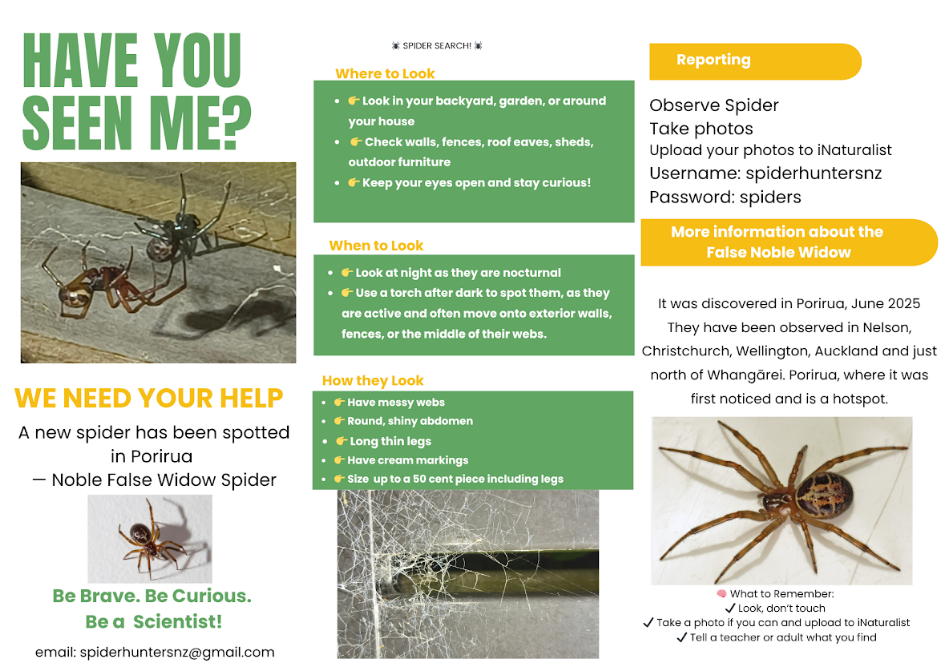
The brochure encourages residents to check gardens, fences, roof eaves, sheds and outdoor furniture, particularly at night when the spiders are more active. People are asked to photograph any suspected sightings and upload them to iNaturalist.
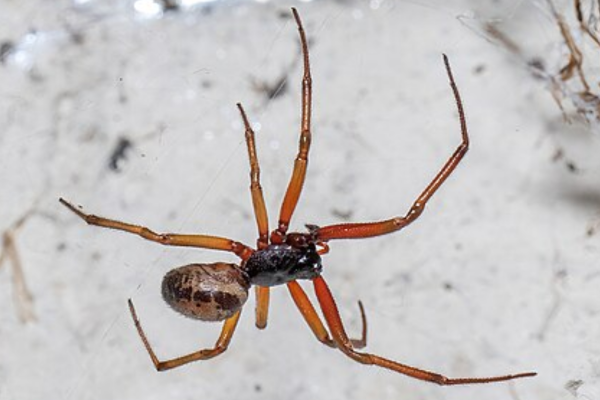
The noble false widow spider, originally from Europe, has become increasingly established in parts of New Zealand. Colville’s brochure says the species was first noticed in Porirua and identifies the city as a hotspot, with additional sightings reported in Wellington, Nelson, Christchurch, Auckland and north of Whangārei.
While the species is not considered aggressive, researchers are interested in tracking its spread and understanding its impact on local ecosystems and native invertebrates.
“Correct identification is really important,” Colville said. “People often mistake harmless spiders for more concerning species, while actual noble false widows may go unnoticed. Good data helps scientists understand where the species is spreading and what impact it may be having.”
Colville said young people had shown particular enthusiasm for the project.
“The children are incredibly observant. Once they know what features to look for, they start noticing spiders and insects everywhere,” she said. “They become active participants in science rather than just learning about it from a textbook.”
Community groups, schools and scout organisations interested in hosting presentations or workshops during Colville’s next Wellington region visit on May 25, 26 and 27 are encouraged to get involved.
“Citizen science allows communities to work together and contribute to something much bigger,” Colville said.
Residents interested in participating can download the iNaturalist app and upload photographs of local species observations to help researchers monitor biodiversity across New Zealand.